
When weighing the detached vs attached adu oakland homeowners face, it quickly becomes clear this is one of the first real forks in the road for anyone planning a secondary unit. And it’s not just a style preference. It affects your budget, your timeline, how much rent you can charge, and what your property is worth when you sell. This guide breaks down exactly how these two ADU types differ across Oakland neighborhoods like Rockridge, Dimond, and West Oakland, so you can make the right call for your specific lot.
The Core Difference: What Sets Detached and Attached ADUs Apart in Oakland
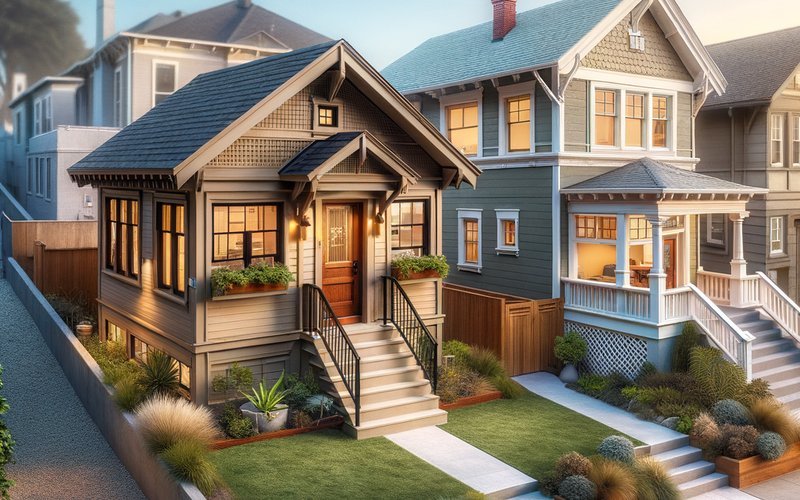
A detached ADU is a completely separate structure on your lot, with its own foundation, walls, and roof, not physically connected to your main home. An attached ADU shares at least one wall with the primary residence, functioning more like an addition or a converted portion of the house.
Oakland’s Planning Code defines these two categories under its ADU regulations aligned with California state law (Government Code Section 65852.2). The distinction matters beyond just appearance. Detached ADUs count toward your lot’s maximum lot coverage, which is capped at 40–50% in many Oakland residential zones. An attached ADU, because it replaces interior space or expands the footprint of the existing home, can sometimes work within tighter coverage limits.
So if your lot is already partially covered by a garage, a porch, or a large main house, a detached structure might push you over the limit. That’s when attached ADUs become the only feasible path. Understanding your current lot coverage before you draw any plans is step one, every time.
Side-by-Side Comparison: Detached vs. Attached ADU in Oakland
Here’s a direct comparison of both ADU types across the factors Oakland homeowners ask about most. The differences in cost and rental income alone can shift the decision entirely depending on your goals.
| Factor | Detached ADU | Attached ADU |
|---|---|---|
| Typical Build Cost | $180,000–$320,000 | $110,000–$220,000 |
| Average Timeline (Permit + Build) | 12–18 months | 9–14 months |
| Monthly Rental Potential | $2,200–$3,500 | $1,500–$2,400 |
| Resale Value Added | High (functions as separate asset) | Moderate (blends into home value) |
| Best Lot Type | Lots over 4,000 sq ft with usable backyard | Smaller urban lots or hillside parcels |
| Privacy for Tenants | High | Moderate |
| Construction Complexity | Higher (new foundation, utilities, separate systems) | Lower (ties into existing systems) |
| Best For | Investors, long-term renters, multigenerational families | Owner-occupants, in-law suites, budget-focused builds |
A homeowner in Dimond with a 5,500 sq ft lot and an unused backyard is almost always better off with a detached ADU. The rental premium alone, often $500–$700 more per month over an attached unit, starts paying back the higher build cost within 3–4 years.
But if you’re in North Oakland with a 3,200 sq ft lot and the house already covers most of it, an attached ADU might be your only real option. And honestly, that’s still a solid investment. Attached ADUs in Oakland’s tighter neighborhoods are renting for $1,800–$2,200 per month with very low vacancy rates.
Oakland Zoning Rules That Decide Which ADU Type You Can Build
Oakland’s ADU zoning rules follow California state law but layer on local requirements that change by neighborhood and residential zone. Before you fall in love with a floor plan, check what your parcel actually allows.
Lot Size and Coverage Minimums
Oakland does not set a minimum lot size for ADUs, thanks to state law overrides. But your existing lot coverage matters a lot. In most RM and RD zones across Oakland, the maximum lot coverage is 40–50%. Add up your house footprint, garage, and any outbuildings, and if you’re close to that ceiling, a new detached structure will tip you over.
Attached ADUs that expand the existing footprint still count toward coverage, but since they replace or expand the main structure rather than add a new one, the math often works better on smaller parcels.
Setback Requirements by ADU Type
State law limits setbacks for ADUs to a maximum of 4 feet from the rear and side property lines for detached ADUs up to 800 sq ft. Oakland follows this. Larger detached ADUs may require additional setbacks depending on your zone.
Attached ADUs must meet the same setback requirements as the primary structure, which in most Oakland zones means 5-foot side setbacks and 20-foot front setbacks. If your addition needs to go toward the front or side of the home, that can limit how large it can be.
Neighborhood-Specific Notes
In Rockridge, lots tend to run 4,000–6,000 sq ft, with craftsman-style homes that often have detached garages already in the rear. Many homeowners here build detached ADUs behind or instead of the existing garage. West Oakland lots are often 2,500–4,000 sq ft, meaning attached ADUs or garage conversions are more common. Dimond District lots are mid-range, typically 4,500–6,500 sq ft, and frequently support detached backyard ADUs with room to spare.
Rental Income Potential: Which ADU Type Earns More in Oakland?

Detached ADUs consistently command higher rents in Oakland. The reason is simple: tenants pay more for privacy, a separate entrance, and the feel of a standalone home rather than a unit attached to someone else’s house.
In Oakland’s current rental market, a well-finished 1-bedroom detached ADU rents for $2,200–$2,800 per month. A comparable attached ADU, same size and finish level, typically lands in the $1,600–$2,200 range. That gap of $400–$600 per month adds up to $4,800–$7,200 per year. Over 10 years, the higher rental income from a detached unit can more than offset the extra build cost.
Attached ADUs, though, aren’t a bad deal for owner-occupants. If you’re planning to house a family member, or you want the flexibility to use the space yourself someday, the lower build cost and easier daily access make an attached unit a smart choice. Plenty of homeowners in Emeryville and the surrounding East Bay use attached ADUs exactly this way.
One honest note: vacancy matters. Oakland ADUs of both types are seeing vacancy rates under 5% in most neighborhoods, which means the income potential is real for either option, as long as the unit is well-designed and legally permitted.
How Each ADU Type Affects Your Home’s Resale Value
A detached ADU functions as a distinct asset on your property. Buyers see it as a separate rental unit, and that income potential gets priced in directly. In Oakland, homes with a detached ADU are selling at premiums of $150,000–$300,000 over comparable homes without one, depending on the neighborhood and ADU quality.
Attached ADUs blend into the overall home value differently. They add square footage and usability, but buyers don’t always separate them out the way they would a standalone structure. You’ll still see a value bump, typically $80,000–$180,000 in Oakland’s market, but the ceiling is lower than what a detached unit can deliver.
Buyer demand shifts by neighborhood too. In Rockridge and Temescal, investor buyers and house-hackers actively search for properties with detached ADUs, and they’ll pay for it. In West Oakland and Fruitvale, attached units and garage conversions are just as attractive to buyers looking for affordable entry points with income potential built in.
And regardless of ADU type, the unit needs to be fully permitted. An unpermitted ADU adds legal risk and often has to be disclosed, which can spook buyers and drag down offers. Always build to code.
Garage Conversions and Other ADU Options: Where Do They Fit?
Garage conversions are technically classified as detached ADUs in Oakland, since they’re typically freestanding structures. This is great news if you already have a detached garage, because you’re converting an existing footprint rather than building from scratch.
The cost savings are real. A garage conversion in Oakland typically runs $80,000–$140,000, compared to $180,000–$320,000 for a ground-up detached ADU. You’re not paying for a new foundation, and the exterior shell is already there. That said, you’ll still need to meet habitability requirements: insulation, HVAC, egress windows, plumbing, electrical, and ceiling height minimums (7 feet in most cases).
Oakland’s permit path for garage conversions runs through the same Oakland Building Services Division (located at 250 Frank H. Ogawa Plaza) as any other ADU. The review process is generally faster than a new construction ADU because there’s no grading or new foundation to evaluate. Many homeowners in Emeryville and surrounding East Bay cities start with a garage conversion as a lower-cost entry into ADU ownership, then build a full detached unit later if the lot allows.
If you’re considering this route, check out the specifics on garage conversion ADUs in Oakland to understand what the conversion process actually involves before you budget.
Permits, Timelines, and What to Expect From Oakland’s Planning Department
In Oakland, all ADU permits are processed through Oakland Building Services, part of the Planning and Building Department at 250 Frank H. Ogawa Plaza. Since 2020, the city has streamlined its ADU review process significantly in response to state law, but timelines still vary by ADU type and lot complexity.
| Permit Stage | Detached ADU | Attached ADU |
|---|---|---|
| Plan Preparation | 6–10 weeks | 4–8 weeks |
| Initial Plan Check | 4–8 weeks | 3–6 weeks |
| Correction Rounds (avg) | 1–2 rounds | 1–2 rounds |
| Permit Issuance | 2–4 weeks after approval | 2–3 weeks after approval |
| Total Permit Window | 4–7 months | 3–5 months |
| Construction Duration | 6–10 months | 5–8 months |
| Total Project Timeline | 12–18 months | 9–14 months |
Detached ADUs take longer in permitting partly because they require separate utility connection approvals and often involve grading plans if the backyard isn’t flat. Attached ADUs tie into existing systems, so the engineering review is simpler. That said, if your attached ADU changes the exterior of the home significantly, you may trigger design review depending on your zone.
Oakland also requires owner-occupancy for ADU applications in some cases, though state law has relaxed many of these restrictions. Your specific parcel and zone will determine what applies. Working with experienced adu builders oakland who already know the local permit office and common correction triggers can shave weeks off your approval timeline.
Which ADU Type Is Right for Your Oakland Property? Here’s How to Decide
The honest answer: your lot size and existing coverage usually make the decision for you before anything else. If you have 500+ sq ft of usable backyard space and your lot coverage is under 35%, a detached ADU is almost always the better long-term investment. More rental income, more resale value, more appeal to future buyers.
If your lot is tight, your home already covers most of it, or you’re working with a budget under $150,000, an attached ADU or garage conversion is the smarter path. You’ll get a legal, rentable unit faster and cheaper, and it’ll still add meaningful value to your property.
Here are the key questions to answer before you pick a direction:
- What is your current lot coverage percentage?
- Do you have a detached garage that could be converted?
- Is your primary goal rental income, a family member’s housing, or resale value?
- What’s your realistic all-in budget, including permits, design, and construction?
- How long are you willing to wait before the ADU is ready to occupy?
For homeowners in Emeryville and across the East Bay, the detached vs. attached ADU Oakland question is best answered with a site evaluation, not a guess. A contractor who knows Oakland’s specific zoning rules, the quirks of the permit office, and real construction costs in today’s market will save you from making a $50,000 mistake on the wrong ADU type.
Whether you’re leaning toward a backyard ADU or an attached unit, getting the zoning analysis and budget right from day one is what separates a smooth project from a painful one. Start with your lot, know your numbers, and build accordingly.
Frequently Asked Questions
- Can I build a detached ADU on a small lot in Oakland?
- In Oakland, you can build a detached ADU on lots as small as those in dense neighborhoods like West Oakland or Fruitvale, thanks to state ADU law that limits local governments from imposing minimum lot size requirements. A detached ADU up to 800 square feet must be approved regardless of lot size, as long as setback and height rules are met. If your lot is tight, a compact detached unit of 400 to 600 square feet is often the most practical route.
- Is a detached or attached ADU cheaper to build in Oakland?
- Attached ADUs are generally cheaper to build in Oakland because they share at least one wall with the main house, reducing foundation, framing, and utility connection costs. In Oakland, an attached ADU typically runs $180,000 to $320,000 depending on size and finish level, while a detached ADU often costs $220,000 to $420,000 for a fully permitted, custom-built unit. The gap narrows if you’re doing a garage conversion, which can come in as low as $120,000 to $200,000.
- What are the setback rules for detached ADUs in Oakland neighborhoods like Rockridge or West Oakland?
- In Oakland, detached ADUs must maintain a minimum 4-foot setback from the rear and side property lines under current state and local rules, which applies across neighborhoods including Rockridge and West Oakland. If you’re rebuilding an existing structure in the same footprint, you may qualify for a zero-setback exception. Oakland’s Bureau of Planning can confirm lot-specific setback requirements, especially for irregular lots or lots near creeks and fire hazard zones.
- Does a detached ADU add more resale value than an attached ADU in Oakland?
- In Oakland, a detached ADU typically adds more resale value than an attached ADU because buyers and investors see it as a fully independent rental unit or multigenerational living space. A well-built detached ADU in neighborhoods like Temescal or Laurel can add $150,000 to $300,000 to a home’s appraised value depending on size, finish, and current rental market conditions. Attached ADUs still add value, but the premium is generally lower because tenants and future buyers may perceive less separation and privacy.
- How long does it take to permit a detached ADU vs. an attached ADU in Oakland?
- In Oakland, permitting a detached ADU through the Bureau of Planning and Building typically takes 3 to 6 months from application to permit issuance, though complex projects or those requiring discretionary review can stretch to 9 months. Attached ADU permits often move slightly faster at 2 to 5 months because structural and utility reviews are less involved when the unit connects to the existing home. Using Oakland’s pre-approved ADU plan program, available through the city’s ADU portal, can cut review time by 4 to 8 weeks for either type.
- Can I convert my garage into a detached ADU in Oakland?
- In Oakland, converting a detached garage into an ADU is one of the most cost-effective ways to add a legal rental unit, and the city allows it under both state ADU law and local zoning. A typical detached garage conversion in Oakland runs $120,000 to $200,000 fully permitted, depending on the garage’s condition, size, and whether you’re adding a bathroom and kitchen from scratch. You’ll need to meet minimum ceiling height requirements of 7 feet, provide natural light and ventilation, and connect to city utilities, all of which Oakland’s Bureau of Building handles during the standard permit review process.